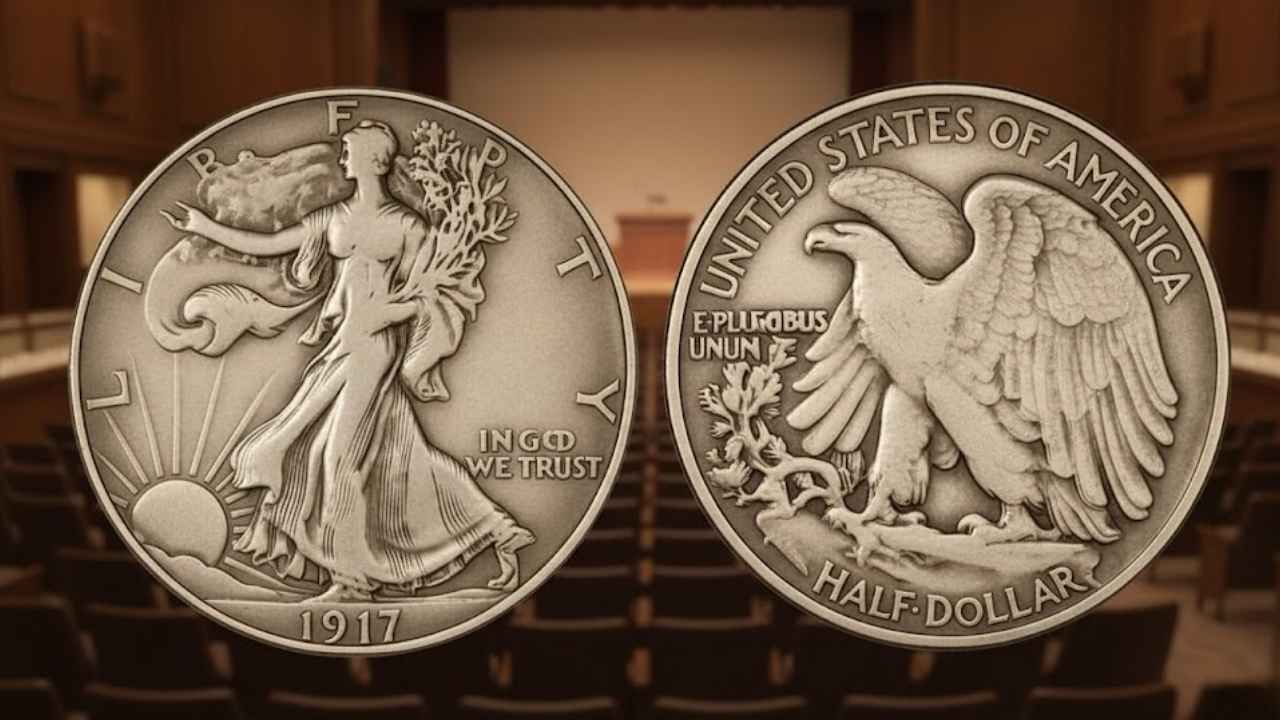
1917 Walking Liberty Half Dollar Value: The 1917 Walking Liberty Half Dollar stands as one of the most celebrated silver coins in U.S. numismatic history. Known for its artistic design and complex minting variations, this early 20th-century half dollar has transformed from a widely circulated coin into a high-value collectible. Certain rare varieties and top-grade examples now reach prices close to $175,000, placing this issue among the most valuable Walking Liberty halves ever sold.
1917 Walking Liberty Half Dollar Value Overview
| Variety | Typical Circulated Value | Mint State Value Range | Top Auction Prices |
|---|---|---|---|
| 1917 Philadelphia (No Mint Mark) | $25 – $80 | $3,000 – $25,000 | $70,000+ |
| 1917-D Obverse Mint Mark | $150 – $600 | $15,000 – $90,000 | $175,000 |
| 1917-S Obverse Mint Mark | $180 – $700 | $18,000 – $95,000 | $160,000+ |
| 1917-D Reverse Mint Mark | $60 – $250 | $4,000 – $35,000 | $85,000 |
| 1917-S Reverse Mint Mark | $70 – $300 | $5,000 – $40,000 | $90,000 |
This value guide highlights how mint mark placement, condition, and strike quality dramatically affect market prices.
This guide examines how values developed over time, which 1917 Walking Liberty Half Dollar varieties gained the most, and how collectors can use historical price behavior to make informed buying or selling decisions.
Key Highlights of the 1917 Walking Liberty Half Dollar Market
- Over the decades, this coin’s value trajectory has been shaped by several powerful forces:
- Premium pricing for certified high-grade coins
- Strong appreciation for Denver and San Francisco mint issues
- Exceptional demand for Full Head and Full Strike examples
- Distinct value gaps between obverse and reverse mint mark varieties
- Intense auction competition for low-population coins
- Sustained collector interest limiting market supply
Together, these factors explain why 1917 Walking Liberty values remain resilient and upward-trending.

Early Years: Heavy Use and Limited Preservation
- When released, the 1917 Walking Liberty Half Dollar entered circulation immediately:
- Most coins were used in daily commerce
- Few collectors set aside uncirculated examples
- High-grade survivors were scarce from the beginning
- Silver content provided only modest intrinsic value
- Numismatic interest was minimal during early circulation
These conditions laid the groundwork for long-term rarity, especially in higher grades.
Growing Collector Awareness
- As appreciation for classic U.S. coinage increased, collectors began to recognize the series’ artistic and historical importance:
- Mint-marked coins started commanding premiums
- Condition became a key pricing factor
- Strike sharpness gained attention
- Early auction results hinted at future value growth
This period marked the transition from circulation coin to collectible asset.
Importance of Mint Mark Placement
- The 1917 issue is unique for having mint marks placed in two different positions:
- Obverse mint mark coins proved scarcer in high grades
- Reverse mint mark coins offered more availability but lower top populations
- Variety collecting gained momentum
- Specialists drove demand for specific combinations
Mint mark placement remains one of the most important value drivers today.
Condition Rarity and Grade Separation
- As grading standards tightened, price differences widened dramatically:
- Mint State coins outperformed circulated examples
- MS65 and higher grades showed exponential growth
- Strike quality affected grade potential
- Eye appeal premiums became standard
This stage established condition rarity as a defining element of value.
Auction Competition and Registry Pressure
- Modern registry set collecting intensified demand:
- MS67 and above examples became exceptionally scarce
- Full Head designations multiplied values
- Population reports limited available supply
- Single-grade jumps often doubled prices
Auction records from this era continue to influence market expectations.
Modern Market Stability and Growth
- Today, the 1917 Walking Liberty Half Dollar market remains strong:
- Top-grade coins regularly achieve six-figure prices
- Certified varieties dominate investor interest
- Long-term holders restrict availability
- Silver content supports baseline value
The coin has matured into a stable, high-confidence collectible.
1917 Walking Liberty Half Dollars With the Strongest Appreciation
- Coins showing the most significant long-term gains include:
- 1917-D obverse mint mark in Mint State
- 1917-S obverse mint mark with sharp strike
- MS67 and higher graded examples
- Full Head designated coins
- Low-population registry pieces
These represent the highest-growth segments within the series.
What Continues to Drive Value Higher?
- Several factors continue pushing values upward:
- Low survival rates in true Mint State
- Persistent collector demand
- Artistic appeal of the design
- Limited availability due to private ownership
- Strong performance at major auctions
These fundamentals suggest continued strength in future markets.
Final Verdict
The 1917 Walking Liberty Half Dollar has evolved from a heavily circulated silver coin into a cornerstone of elite U.S. numismatics. With select varieties approaching $175,000 in auction results, it remains one of the most respected and desirable half dollars ever minted. For collectors focused on rarity, condition, and long-term appreciation, this coin offers enduring value supported by history, artistry, and scarcity.
Disclaimer
Coin values fluctuate based on market conditions, grading standards, and collector demand. Prices mentioned are estimates and should not be considered guaranteed investment returns. Always consult certified grading services or professional numismatic experts before buying or selling high-value coins.