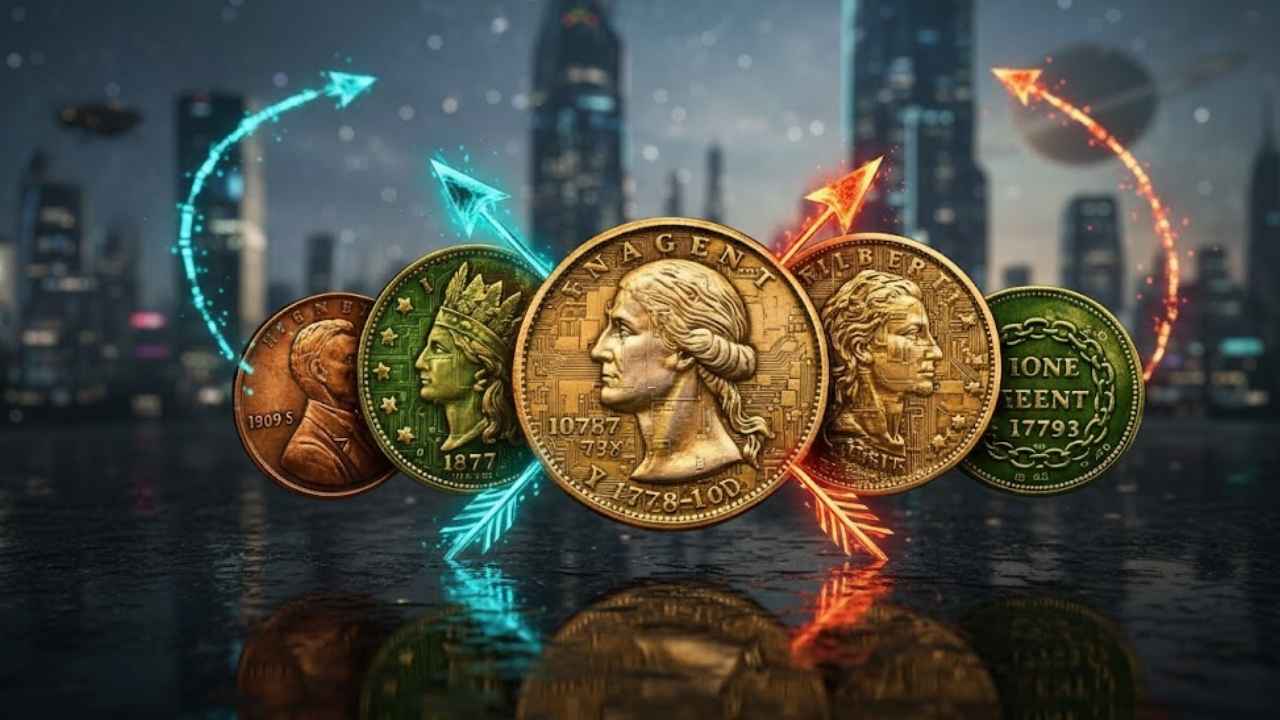
Wheat Penny Values: The Lincoln Wheat Penny, first struck in 1909, is one of the most celebrated coins in American numismatics. Featuring Abraham Lincoln on the obverse and two wheat stalks on the reverse, this coin was designed by Victor David Brenner. For decades, Wheat Pennies circulated widely across the United States, becoming an everyday part of American life. While most Wheat Pennies hold modest value, select rare varieties have achieved remarkable prices among collectors. Tracking Wheat Penny values through the years offers enthusiasts a comprehensive understanding of their history, rarity, and market worth.
Key Wheat Penny Facts and Values
| Year | Mint | Notable Variety | Estimated Value | Composition | Rarity Level |
|---|---|---|---|---|---|
| 1909-S VDB | San Francisco | Designer Initials on Reverse | $50,000–$500,000+ | Copper | Ultra Rare |
| 1914-D | Denver | Standard Issue | $400–$5,000+ | Copper | Rare |
| 1922 No D | Denver | Missing Mintmark | $10,000–$50,000+ | Copper | Extremely Rare |
| 1931-S | San Francisco | Standard Issue | $200–$2,000+ | Copper | Scarce |
| 1943 Copper | Philadelphia | Error Coin | $100,000–$500,000+ | Copper | Ultra Rare |
| 1944 Steel | Various | Leftover Steel Planchet | $50,000–$200,000+ | Steel | Very Rare |
| 1955 Doubled Die | Philadelphia | Double Inscriptions | $2,000–$250,000+ | Copper | Highly Collectible |
The Early Years of Wheat Pennies
When introduced in 1909, the Wheat Penny was the first U.S. coin to depict a real person. The 1909-S VDB variety became legendary because it featured the designer’s initials on the reverse, a detail later removed due to public criticism. With only 484,000 coins minted, it is one of the most sought-after Wheat Pennies. Its value has consistently grown, often reaching tens of thousands of dollars in high-grade condition.
Wheat Pennies in the 1910s
The 1910s saw steady production, with coins from the Denver and San Francisco mints generally scarcer than Philadelphia issues. The 1914-D Wheat Penny is among the most prized from this decade, with a mintage just above one million. Its value ranges from several hundred dollars in circulated condition to thousands for coins in mint state.
Wheat Pennies in the 1920s
The 1920s produced several noteworthy coins, including the famous 1922 No D variety. Although struck at the Denver Mint, some coins had a weak or missing “D” mintmark, creating a highly collectible error. In excellent condition, the 1922 No D Wheat Penny can fetch tens of thousands of dollars at auction. Other 1920s coins are more common, but condition heavily influences their market value.

Wheat Pennies in the 1930s
Production increased during the 1930s, but several issues stand out. The 1931-S Wheat Penny, with a mintage under one million, is among the scarcer coins. Its historical significance during the Great Depression and low production numbers have driven steady growth in value for collectors.
Wheat Pennies in the 1940s
The 1940s include some of the most legendary Wheat Pennies. During World War II, copper was diverted for the war effort, so pennies were made from zinc-coated steel in 1943. A few copper planchets were accidentally used, creating the ultra-rare 1943 Copper Penny. Similarly, the 1944 Steel Penny, struck from leftover steel planchets, is highly sought after. Both coins have sold for hundreds of thousands of dollars in pristine condition.
Wheat Pennies in the 1950s
While most 1950s Wheat Pennies are common, the 1955 Doubled Die Penny is one of the most famous U.S. error coins. Doubling is visible in the inscriptions “LIBERTY” and “IN GOD WE TRUST,” making it a prized collectible. Depending on condition, values can range from several thousand to over $200,000.
How Condition Impacts Wheat Penny Value
Condition is critical in determining Wheat Penny value. Coins graded at Mint State levels, particularly MS65 or higher, command significantly higher prices than circulated examples. Professional grading services provide numerical scores, giving collectors confidence in authenticity and market value. Even common Wheat Pennies in pristine condition can be worth several dollars, while rare varieties can reach six-figure valuations.
Collector Demand and Market Trends
Collector interest drives Wheat Penny values. Error coins, missing mint marks, and unusual compositions consistently attract attention at auctions. Over time, rare Wheat Pennies have appreciated steadily, reflecting both scarcity and growing demand among numismatists. For collectors, investing in Wheat Pennies combines financial reward with historical significance.
Rare Wheat Pennies Still in Circulation
Despite their rarity, some valuable Wheat Pennies remain hidden in circulation. Coins may be tucked away in jars, drawers, or old collections for decades. Occasionally, sharp-eyed collectors uncover ultra-rare varieties in rolls of pennies or inherited collections, sparking excitement and inspiring future generations of numismatists.
The Legacy of Wheat Pennies
The Lincoln Wheat Penny represents history, artistry, and the thrill of discovery. From the 1909-S VDB to the 1943 Copper Penny, these coins highlight the richness of American numismatic heritage. Collectors continue to cherish Wheat Pennies for their rarity, condition, and historical context, ensuring their lasting significance in coin collecting.
Final Verdict
Wheat Pennies may appear ordinary, but select varieties have become extraordinary treasures. Coins like the 1909-S VDB, 1914-D, 1922 No D, 1931-S, 1943 Copper, 1944 Steel, and 1955 Doubled Die remain legendary in the collector world. Their rarity, historical significance, and market value make them some of the most sought-after coins in American numismatics. Understanding Wheat Penny values allows collectors to appreciate the depth, history, and excitement of this timeless series.
Disclaimer
This article is for educational and informational purposes only. Coin values fluctuate based on rarity, condition, and market demand. Always consult professional grading and appraisal services before buying, selling, or investing in rare Wheat Pennies or other collectible coins.